Skip to content
Australia AUD
MAC Knives

MAC Knives

Sharpness you can't let go of.

OriginJapan — made in Seki, Gifu Prefecture.
Est.1965
Known forThin, light, razor-sharp blades; the proprietary MAC edge; molybdenum high-carbon steel; hand-finishing in Seki; the rounded-tip chef's knife; decades-long professional following.
Hand-finished by Seki craftsmenSub-zero tempered high-carbon steelHollow-ground for clean release60–61 HRC, 15° per sideOver 30 million sold worldwide

MAC makes thin, light, exceptionally sharp kitchen knives forged from a high-carbon molybdenum steel and finished by hand in Seki, Japan. The blades are ground far thinner than most Western knives and hardened to around 59–61 on the Rockwell scale, so they take a fine edge, hold it through long sessions, and come back quickly on a stone. The signature is the MAC edge — a double bevel ground at roughly 15 degrees a side, sitting between the razor geometry of a traditional Japanese blade and the durability of a Western one. The result is a knife that feels like an extension of the hand: agile enough for the finest slicing, robust enough for daily prep, and comfortable enough to use all day without fatigue.
Filter
  • Sort by

EU's Take

Our Take on MAC

We've sold MAC for years. Here's the honest read.

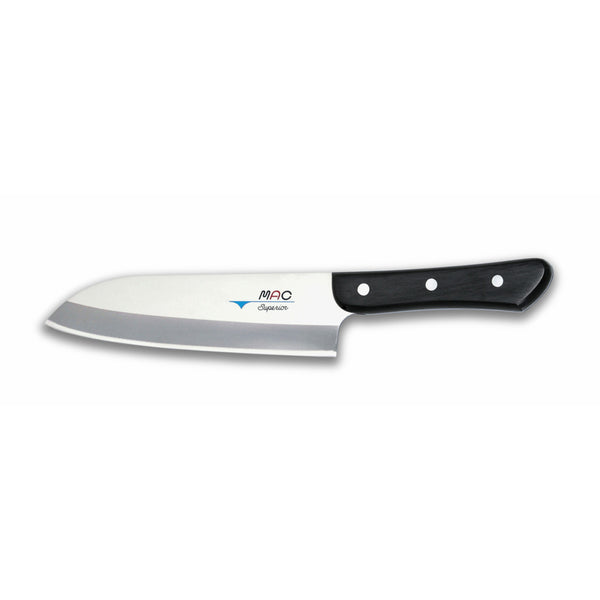
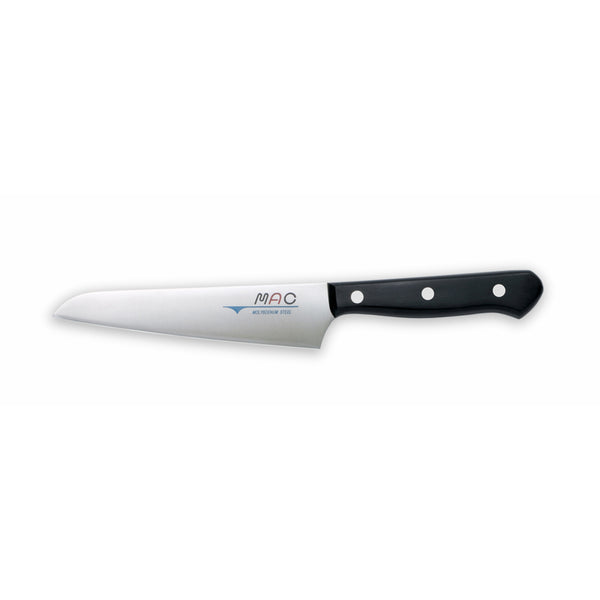
Buying your first one. Most people should start with the Professional MTH-80. It's the 200mm chef's knife on every "best of" list for a reason. If 200mm feels long, the Professional santoku at 165mm does 90% of the same work in a shorter, taller blade. If the Professional price is a stretch, the Chef series TH-80 is the same blade geometry and the same Seki steel without the bolster — genuinely close performance for less money. The Superior series sits between them with a sandblasted finish and slightly different handle feel.

The Original series isn't a step down. It's a different brief. Rounded tips, no bolster, lighter still — built for commercial line cooks who need a tool that moves fast through hours of prep. If you like a light, nimble knife and don't need the heft of the Professional, the Original is brilliant and underrated.

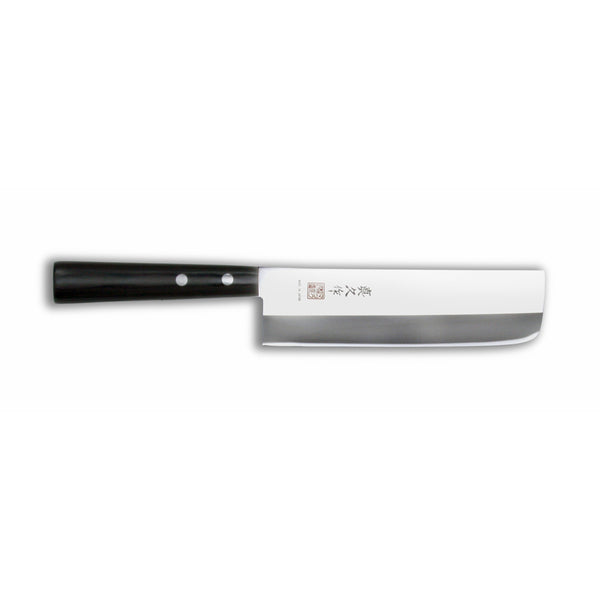
The Japanese Series is for cooks who already know what they're after. Yanagiba for slicing sashimi. Deba for breaking down whole fish. Usuba and nakiri for vegetables. Single-bevel where it matters, traditional Japanese handles, and the same Seki workshop pedigree. If those words mean something to you, you're in the right place. If they don't, the Professional or Chef series is the better starting point.

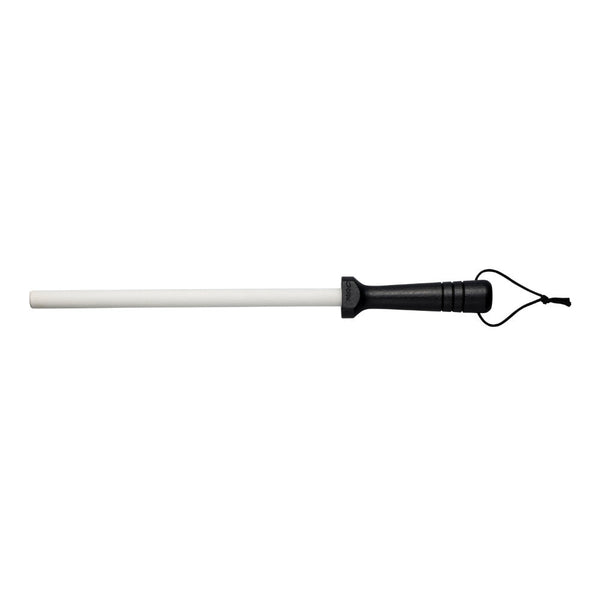
Care, plainly. MAC steel is rust-resistant, not fully stainless. Hand wash, dry straight away, never the dishwasher, never sitting wet in the sink. Hone weekly on a ceramic rod. Sharpen on a Japanese whetstone at 15° once or twice a year depending on use. Do that and the knife will outlast every other piece of equipment in your kitchen.

The thing nobody mentions. MAC counterfeits are everywhere on marketplace sites now. The fakes look close in photos and feel wrong the second you pick one up. Buy from an authorised Australian stockist like us and you'll never have to wonder. We hand-check every knife before it ships.

A Broken Knife in a Chicago Kitchen.

In 1954, a Japanese art student named Tatsuo Kobayashi was working nights as a line cook in Chicago. The restaurant kitchen gave him a heavy German chef's knife with a long pointed tip — blunt, awkward, and dangerous. One shift he dropped it. The point stuck three centimetres into the wooden floor. When he yanked it out, the tip snapped clean off.

The broken blade looked terrible. So he took it to a sharpening stone and reshaped the end into a soft curve, rebuilt the edge, and went back to work. The knife was suddenly easier to handle. Safer. Faster. He noticed the rounded tip didn't cost him anything at the cutting board.

That moment stuck with him. He returned to Japan in 1958 and spent seven years asking why kitchen knives still looked like weapons. In 1965 he founded MAC Corporation in Osaka with a clear brief: safer, sharper, lighter, easier to use. He took the centuries-old blade tradition of Seki City — the same craftsmen who had forged samurai swords for seven hundred years — and pointed it at a new problem. How do you build a knife that cuts like a Japanese blade but feels like a Western one?

The answer was the hybrid edge. Sharpened at roughly 15° per side, ground thin but supported by a sub-zero tempered high-carbon steel, married to a Western handle shape and balance point. It cut better than anything Western cooks had used. It felt familiar enough that they actually used it.

Sixty years on, MAC is still based in Sakai, still made in Seki, still finished by hand through up to sixty-four production steps. The Professional MTH-80 has become one of the most awarded chef's knives in history. The brand stayed small, family-run, and stubbornly focused on the one thing it set out to do.

Make the knife people who cook for a living actually want to use.

Frequently Asked Questions

Where are MAC knives made?

Seki City, Gifu Prefecture, Japan. Every step happens in Japan by Japanese craftsmen, in some cases through up to sixty-four production stages per knife.

What's the difference between the Professional and Chef series?

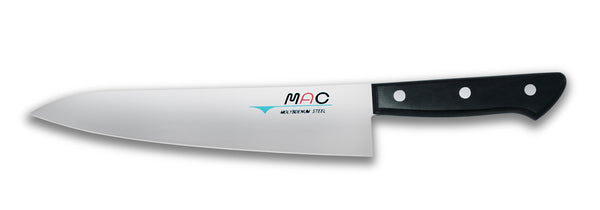
Same blade geometry, same Seki-forged steel, same 15° edge. The Professional has a minimalist bolster and slightly thicker spine for a more substantial feel in the hand. The Chef series has no bolster and a different handle profile, which is why it comes in at a lower price.

Is the MAC MTH-80 the knife from The Bear?

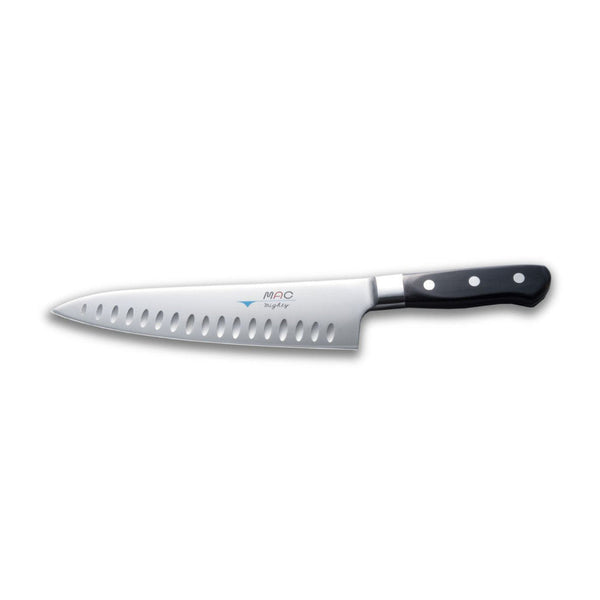
Yes. The MAC Professional Mighty 200mm chef's knife is the one featured on the show, and the same model The New York Times, Food & Wine, and the Strategist all rate as the best chef's knife on the market.

Can MAC knives go in the dishwasher?

No. The steel is rust-resistant rather than fully stainless, and the heat plus detergent will damage the edge and the handle. Hand wash, dry immediately, store dry.

What angle is the MAC edge?

Approximately 15° per side, 30° inclusive. It's a hybrid between a traditional Japanese single-bevel and a Western V-edge.

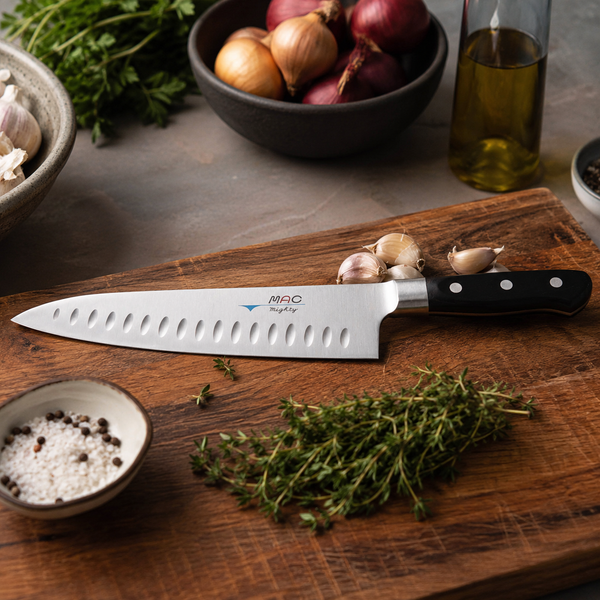
What are the dimples on the blade for?

They're a Granton (hollow) edge — shallow oval scallops ground into the side of the blade. They create small air pockets so sticky foods like potato, apple or squash release cleanly instead of clinging and dragging. They make the most difference on long, repetitive slicing; for many cooks they're a nice-to-have rather than essential, which is why MAC offers both dimpled and plain versions of its chef's knives.

Drawer Title
Similar Products