Skip to content
Australia AUD
Kai

Kai

Never bends, doesn't break, cuts well.

OriginJapan
Est.1908
WarrantyWarranty against manufacturing defects.
Known forJapanese kitchen knives made in Seki, from everyday stainless blades to hand-forged carbon steel — under the flagship Seki Magoroku name.
Made in Seki, JapanFounded 1908, family-ownedSwordsmithing heritageFull range, every budgetHand-finished blades

Kai is one of Japan's great cutlery houses — family-owned, founded in 1908 in Seki City, the country's historic blade capital. Its kitchen knives trace a direct line from Seki's samurai swordsmiths, refined over a century into blades trusted by home cooks and professional chefs. Under the flagship Seki Magoroku name sit knives for every hand and budget, from easy-care stainless workhorses to hand-forged carbon-steel blades finished one at a time. Every one carries the same Seki principle: never bends, doesn't break, cuts well.

Filter
  • Sort by

Sold Out
Kai
Kai Electric Knife Sharpener
$99.95$199.95
Sold Out
Kai
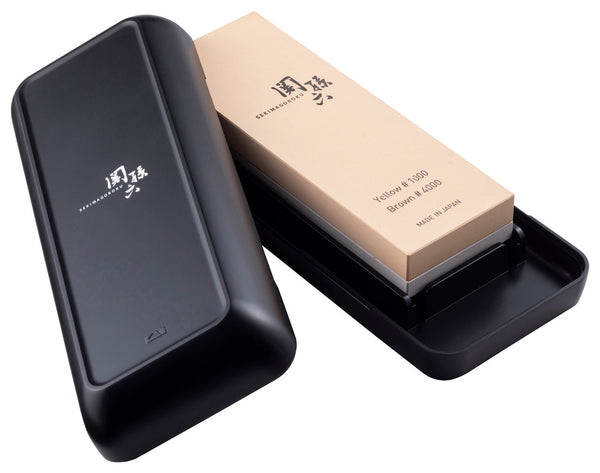
Kai Seki 4000 Grit Whetstone
$89.50$179.00
Clearance
40% Off
Kai
Kai Seki 220 Grit Whetstone
$80.95$135.00
EU's Take

Why We Stock Kai

Kai is one of the few knife brands where the heritage is literal, not marketing. The company grew straight out of Seki's sword tradition, and you can feel it in the blades — the same obsession with edge and balance, carried into the kitchen. What we value is the range: a customer can start with an Amairo santoku that's genuinely dishwasher-safe and a joy to use, and over the years grow into a hand-forged Aogami yanagiba that's closer to an heirloom than a tool. Few brands span that distance without dropping their standards anywhere along it. For us it's the bridge between an everyday Japanese knife and a serious one, all made in the same town by the same hands.

From Samurai Swords to the Kitchen

In 1908, at just twenty, Saijiro Endo opened a small workshop in Seki City to craft folding knives. Seki was no ordinary town: for centuries its master swordsmiths had armed Japan's samurai, until the Meiji government's ban on carrying swords forced those craftsmen to turn their skill to knives and everyday blades. Endo built his company on that inheritance, and one of his enduring creations was the Seki Magoroku line, named after the legendary swordsmith Magoroku of Seki and built on the maker's creed that a blade should never bend, never break, and always cut well. More than a century on, Kai is still owned and run by the Endo family, still headquartered in its Seki heartland, and now one of Japan's most respected cutlery houses — though its kitchen knives remain the truest expression of where it began. Seki itself is recognised today as one of the world's three great knife-making cities, alongside Solingen and Sheffield.

Frequently Asked Questions

Are Kai knives actually made in Japan?

Yes — Kai's Seki Magoroku, Manasaya and traditional knives are made in Seki City, Gifu Prefecture, the historic centre of Japanese blade-making. Each product page states the origin; the premium Aogami and Kaname lines are hand-finished there.

What's the difference between the Kai ranges — which should I buy?

It depends on use and care. Amairo and Shoso are easy-care stainless knives for everyday cooking. Imayo, Shiraai, Shironezu and Benifuji are mid-range stainless lines with different finishes and handle styles. Kaname is the premium 3-layer stainless line (Red Dot award-winning). Aogami, Kinju and KK are traditional single-bevel blades for fish and vegetables. Hocho is the value everyday line. If you want low-maintenance, choose a stainless range; if you want the finest edge and will care for it, choose Aogami.

Which Kai knives are dishwasher safe?

The stainless lines — such as Amairo, Shoso and Manasaya — are designed for easy care and tolerate the dishwasher, though hand washing always preserves the edge and finish longer. The carbon-steel Aogami knives must never go in the dishwasher: they need hand washing, drying and occasional oiling to prevent rust.

Why do the carbon-steel Aogami knives need so much care?

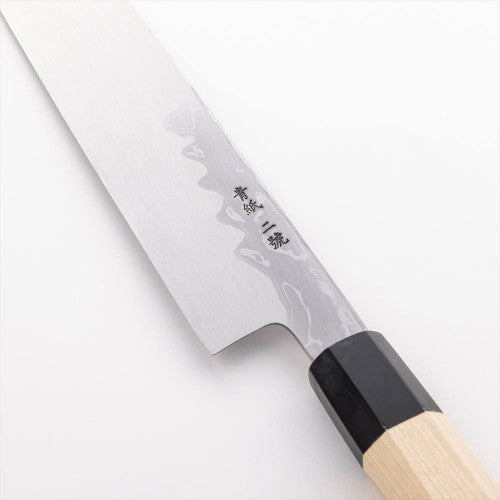
Aogami (Blue Paper No. 2) is a high-carbon, non-stainless steel. It takes a far finer, longer-lasting edge than stainless, but in exchange it reacts to moisture and acids. Hand wash and dry it immediately after use, and oil the blade with camellia or a neutral oil. Over time it develops a darkened patina — this is normal and protective, not damage.

What is a single-bevel knife, and is it hard to use?

Knives like the yanagiba, usuba, deba and takohiki are sharpened on one side only, which lets them take an extremely acute edge for clean, precise cuts — ideal for sashimi and fine vegetable work. They take practice and are usually ground for right-handed use, so they suit cooks ready to learn traditional Japanese technique rather than absolute beginners.

How do I sharpen a Kai knife — can I use a sharpening steel?

No. Because Kai blades are hard, a traditional sharpening steel is unsuitable and can damage the edge. Kai knives are designed to be maintained on whetstones — Kai offers a full range of grits, from coarse repair stones to fine finishing stones — and the carbon-steel knives in particular should only be sharpened on stones.

Is Kai the same as Shun?

Both are made by the Kai Group in Seki, but they're sold as separate brands. Shun is Kai's standalone premium Western-market line; Kai's own knives, led by Seki Magoroku, are a distinct range with their own heritage and identity.

Related Brands

Drawer Title
Similar Products