Skip to content
Australia AUD
Peer Sorensen

Peer Sorensen

Australia's Cutting and Serving Board Specialist

OriginAustralia
Est.1981
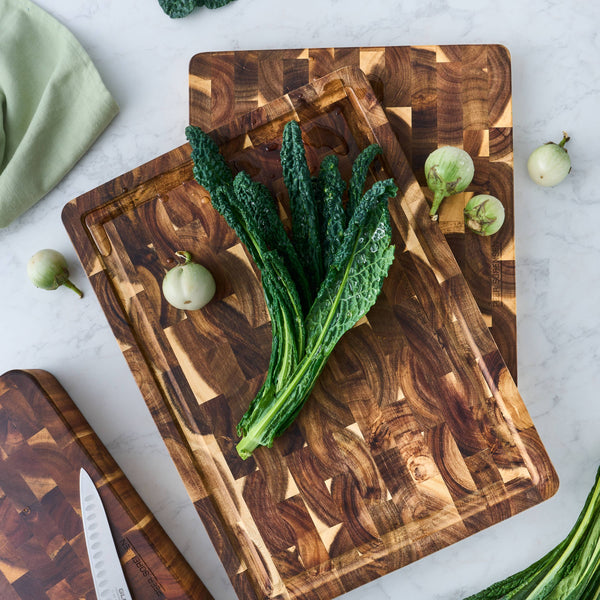
Known forSolid timber cutting and serving boards in seven woods and four constructions, from a 27cm slim line board to a 7cm thick end grain block.
Seven timbers, four constructionsEnd grain to slim lineGentler on knives than plasticBoards you oil, not replace

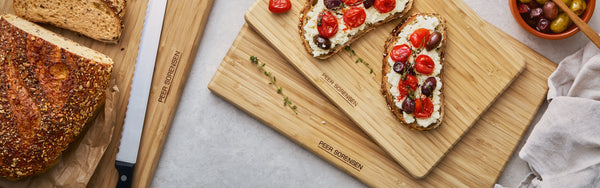
Peer Sorensen has been making timber boards since 1981, originally from Tasmanian hardwoods and now from faster-growing timbers chosen to take the pressure off old-growth forest. Acacia, bamboo, mango, teak, oak, beech and rubber wood, across long grain, end grain, slim line and tri-ply construction. Boards for prep, boards for serving, and the cheese sets, knife blocks and trivets that go with them.

Wood earns its place on a bench. It is gentler on a blade than glass or stone, it is naturally antibacterial, and a board that gets oiled now and then will outlast most of the kitchen around it.

  • Sort by

New
25% Off
New
25% Off
New
28% Off
New
24% Off
New
24% Off
New
47% Off
Peer Sorensen
Peer Sorensen Cheese Knife Set of 4
$28.95$54.95
EU's Take

Why We Carry the Whole Range

Most homewares brands treat boards as a category. Peer Sorensen treats them as the business, and it shows in the depth: ten sizes in Long Grain alone, six in Slim Line, and construction choices that actually change how a board performs rather than just how it looks.

That depth is why we stock the range rather than a selection. A 27cm slim line board and a 7cm end grain block are different tools for different cooks, and having both on the shelf means we can put people on the right one instead of the one that happened to be in stock.

From Tasmanian Hardwood to Sustainable Timber

Peer Sorensen started making wooden chopping boards in Australia in 1981. The early boards were cut from Tasmanian hardwoods, timbers that are slow-growing, dense, and increasingly too precious to be turned into kitchen equipment.

The brand moved away from them deliberately. Today the boards come from faster-growing species out of managed forests: acacia, bamboo, mango, rubber wood, teak, oak and European beech. Rubber wood is milled from plantation trees at the end of their latex-producing life, and bamboo regrows quickly enough to be genuinely renewable. It is a shift that most timber brands have had to make, and Peer Sorensen made it early.

What did not change is the approach to the wood itself. The boards are finished to bring out the grain rather than bury it under a coating, which is why no two acacia boards look alike and why the figure in a mango board is worth turning over in your hands before you buy.

The range has grown outward from cutting boards into the things that surround them: carving boards with channels for a resting roast, paddle and tapas boards for a long table, cheese sets, knife blocks and trivets. All of it in the same timbers, so a kitchen and a table can be matched rather than assembled.

Frequently Asked Questions

What is the difference between long grain and end grain?

Long grain boards are cut with the grain running along the length of the board. End grain boards are built from blocks stood upright, so the cutting surface is the ends of the fibres rather than their sides.

The difference matters at the blade. On an end grain board the edge passes between the fibres instead of across them, and the surface partly closes behind the cut. That means less wear on your knives and a board that does not scar the way a long grain board eventually will. It is why end grain costs more and why it lasts longer.

Long grain is the right choice for most kitchens and most budgets. End grain is worth it if you use good knives daily and want a board you will still be using in twenty years.

How do I look after a timber board?

Rinse it with hot water and a little mild detergent after each use, then towel dry it straight away. Do not soak it and do not leave water sitting on it.

Every so often, wipe an even coat of food-safe mineral oil across the surface. That is the single thing that keeps a board alive. It puts a moisture barrier back into the timber and stops the grain drying out and splitting.

A steel scraper or spatula is fine for lifting food off. Never use steel wool or a steel brush on the cutting surface. Clean the board thoroughly after any raw meat, and do not leave meat sitting on it.

If your board has two usable faces, turn it over from time to time so both sides wear evenly.

Can Peer Sorensen boards go in the dishwasher?

No. Hand wash every board in the range.

A dishwasher combines prolonged soaking with high heat, which is the fastest way to warp, crack or split a timber board. It also strips the oil out of the surface. A board that would have lasted twenty years can be ruined in a handful of cycles.

Hot water, a little detergent, a towel dry and an occasional oil is all any of these boards need.

Do the knife blocks come with knives?

No. Every Peer Sorensen knife block is sold empty, so you fill it with the knives you already own rather than paying for a set you did not choose.

The 17 slot blocks have fixed angled slots, available in acacia or European beech. The iBlock has no slots at all. It is filled with thousands of fine polypropylene strands, so a knife goes in anywhere at any angle and the block adapts to whatever you own, including awkward shapes like a cleaver or a bread knife.

If you are buying knives at the same time, we can match a block to them in store.

Related Brands

Drawer Title
Similar Products