Skip to content
Australia AUD
Flair Espresso

Flair Espresso

Handcrafted espresso.

OriginUnited States
Est.2016
Known forThe device that created the modern manual-espresso category — a hand-powered lever press that pulls café-pressure shots with no electricity.
No electricity, no boilerCafé pressure by handIndustry-standard 58mm portafilterOne method, four price pointsBreaks down, travels anywhere

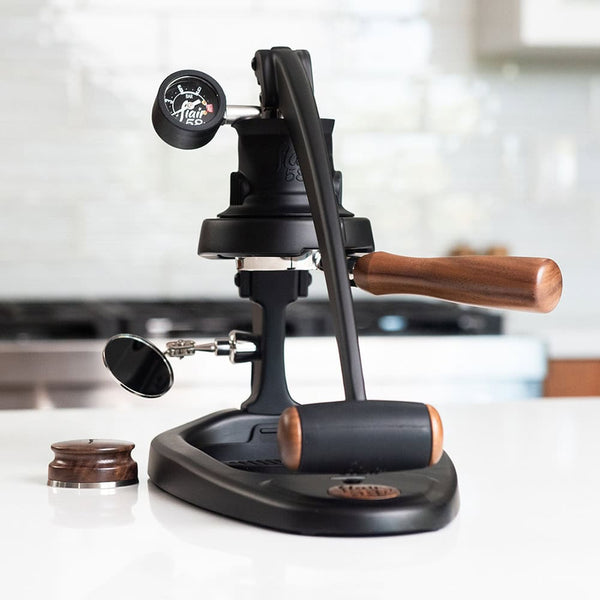
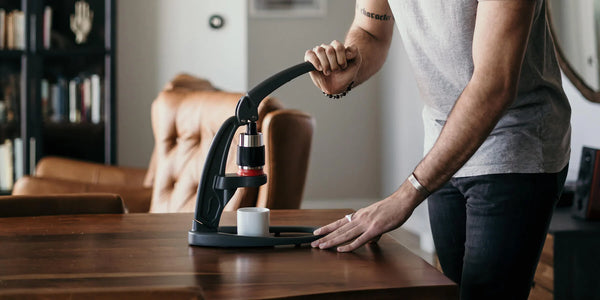
Flair makes lever espresso presses that pull a real shot without a pump, a boiler, or a plug. You add hot water, load the portafilter, and drive the water through the coffee with your own arm — 6 to 9 bar of pressure, the same range a café machine runs. The range spans a plastic-framed entry press, all-metal originals, a 49mm and an industry-standard 58mm system, and a collapsible travel model, backed by the portafilters, baskets, tampers, brew heads, and hand grinders that complete the setup. Built to be assembled on a benchtop, broken down into a case, and brewed with anywhere.

  • Sort by

Flair Espresso
Flair 49 O-Ring Set (5pk)
$25.95
Flair Espresso
Flair Split Spout - Suits PRO 2
$14.95
Flair Espresso
Flair PRO 2 Portafilter Sleeve
$16.95
Flair Espresso
Flair Royal Grinder
$339.00
Flair Espresso
Flair Preheat Funnel
$35.95
EU's Take

Buy it for the ritual, not the convenience.

Be honest with yourself about what you want from a coffee. If you want to press a button and walk away, a Flair will frustrate you — there's a learning curve, you'll need a good burr grinder and a kettle, and your first few shots will be ordinary. But if the making is part of the pleasure — if you'd rather cook the meal than order it — a Flair is one of the most rewarding ways to brew, and it will out-shot machines costing several times more. Our advice: start on a NEO Flex or a Classic to learn the motion cheaply, and only step up to the 58 once you know you're hooked. And don't skip the grinder — a Flair with bad grounds is a bad espresso, every time.

The minimum needed for a great espresso

Flair started in 2016 with a question its founder, a Brazilian-born mechanical engineer named Sergio Landau, kept turning over: what is the least a person actually needs to pull a great shot of espresso? Strip away the pump, the boiler, the electronics — what's left? The answer was a lever, a cylinder, and a pair of hands. He'd spent three decades in precision manufacturing, and he brought that discipline to a machine with almost no parts: an aluminium base, a steel brew cylinder, and human force doing the work a motor usually does.

The first Flair launched on Kickstarter that year and, almost by accident, founded a category. "Manual lever espresso" barely existed as a market before it; today Flair is the name that defines it, and the range has grown from that single press into a full system — an entry model under a hundred dollars, an industry-standard 58mm flagship used in some serious kitchens, and a travel version that folds into a case. The premise has never changed. No electricity, no buttons, no shortcuts — just the person, the lever, and the shot.

Frequently Asked Questions

Do I need to buy a grinder as well?

Yes — and it's not optional. A Flair pulls the shot, but the grind makes or breaks the result, so you need an espresso-capable burr grinder. Pre-ground coffee, supermarket grinds, or a cheap blade grinder won't produce a proper espresso in any Flair. If you're starting from scratch, budget for a grinder alongside the machine and you'll be pouring great shots; skip it and you'll be disappointed no matter which model you buy.

Is it too hard for a beginner?

There's a learning curve, and we won't pretend otherwise — your first few shots will be practice. But the models with a pressure gauge (or a pressurised basket, like the entry models) make it far easier to see what you're doing and dial in quickly. Most people are pulling shots they're proud of within a week or two. If you enjoy the making as much as the drinking, the curve is part of the appeal. If you want push-button coffee, this isn't the machine for you.

Which model should I start with?

If you're new and want the cheapest way in, start with a NEO Flex or a Classic — both teach you the fundamentals without a big outlay. If you already love espresso and want the closest thing to a barista setup, go straight to the 58, which uses a commercial-standard 58mm portafilter and adds temperature control. The 49 PRO sits in between as the best fully-manual model with no electronics. There's no wrong entry point — they all pull the same quality shot once dialled in.

Can it make a cappuccino or latte?

The Flair brews espresso only — there's no built-in milk steaming. For milk drinks you'll add a separate steamer or frother (Flair makes one, or any standalone frother works). If your daily order is a flat white or latte, that's an easy add-on; if you only drink espresso or long blacks, you already have everything you need.

Does it actually make good espresso, or is it a novelty?

It's the real thing. A Flair generates 6–9 bar of pressure — the same range as a commercial machine — and consistently out-performs electric home machines costing several times more, which is why it's a serious tool for espresso enthusiasts rather than a gimmick. The catch is that it delivers that quality only with good grounds and a bit of practice; the ceiling is genuinely high, but you have to meet it halfway.

Can I really travel with it?

The fully-manual models need no power at all — just hot water from any source — and break down into a compact case, so they're popular for offices, caravans, camping and off-grid use. Be realistic about "portable," though: you'll still want your grinder and a way to boil water, so it's brilliant for a cabin or a hotel room, less so for throwing in a daypack. For genuinely pocket-sized travel, the collapsible 2GO is the one to look at.

Drawer Title
Similar Products